
Carpenter Bee - up close and personal
The lantana bush in my backyard is about 6 feet in circumference. It sits before a wooden fence that supports a thriving passionflower vine. The area is simply teeming with carpenter bees.
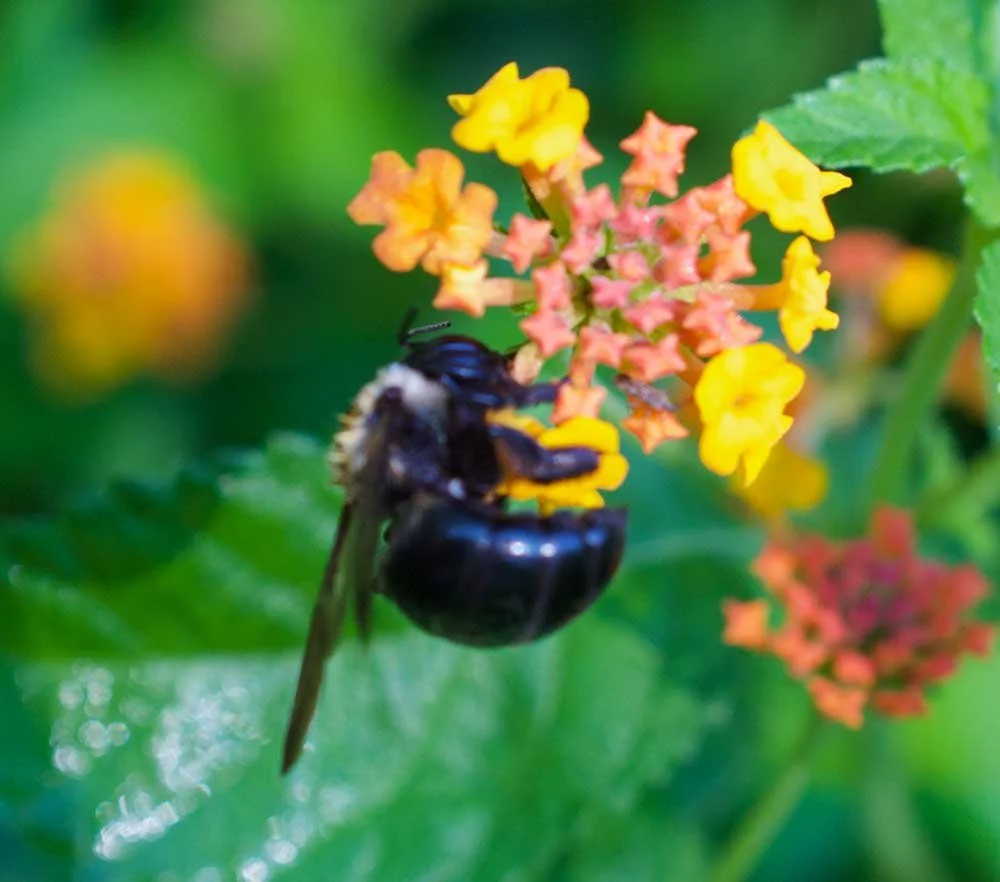
They move from flower to flower, hanging on as they procure both pollen and nectar. The pollen, a rich source of protein, will feed their babies. Carpenter bees are highly effective pollinators for peppers, eggplants, tomatoes, blueberries, and crepe myrtle, among others, and they are the sole pollinators for my lovely passionflowers.
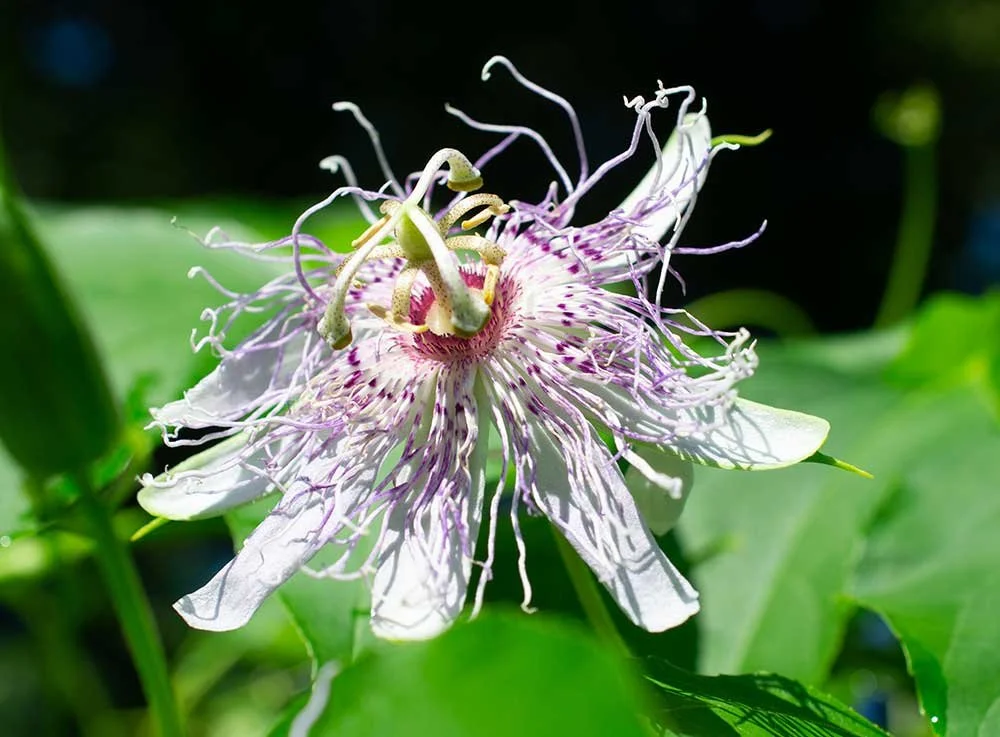
Some folks think of them as a menace. I find them intriguing and worthy of respect. There are plenty of ways to keep them away from wooden structures. I use a homemade lemon spray: 30 drops of lemon essential oil in 1/2 cup of water. Spray the area the bees are visiting a few times in early spring, when they are searching for their digs. Meanwhile, your deck smells delightful, nobody gets hurt, and the bees soon move along to more inviting resources.
You all voted for the carpenter bee on the lantana a few weeks ago, and I've finally begun bringing her to life. The canvas measures 36 by 60 inches. What you see now is the underpainting, my way of sketching the whole thing out. It won’t be red in the end. I’ll be filling in rich greens and yellows to contrast with Ms Carpenter’s shiny black hiney and her fuzzy yellow stole.
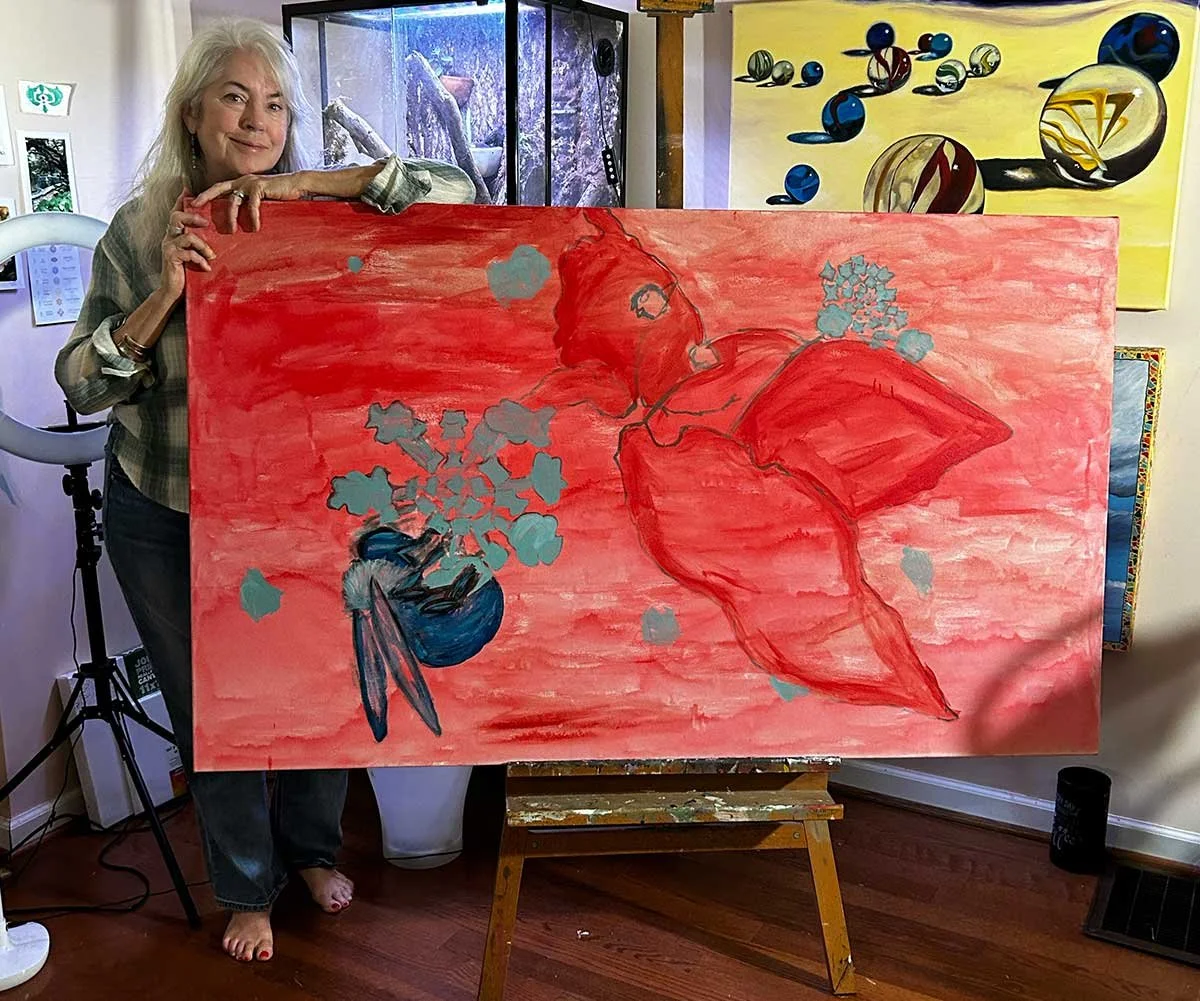
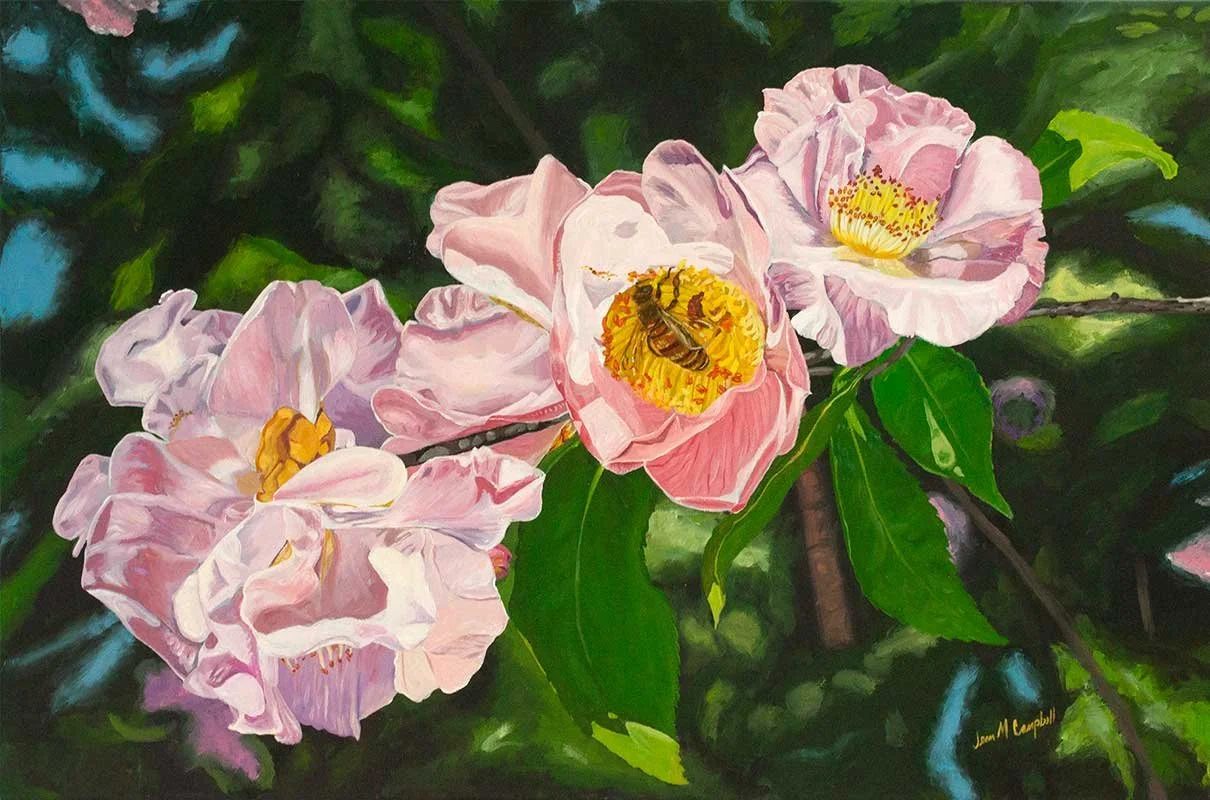
This canvas will be in progress for a couple of weeks, but I have more pollinator-featured pieces. The Camellias with Bellingrath VIP is available now!
Until next Friday,
Jean